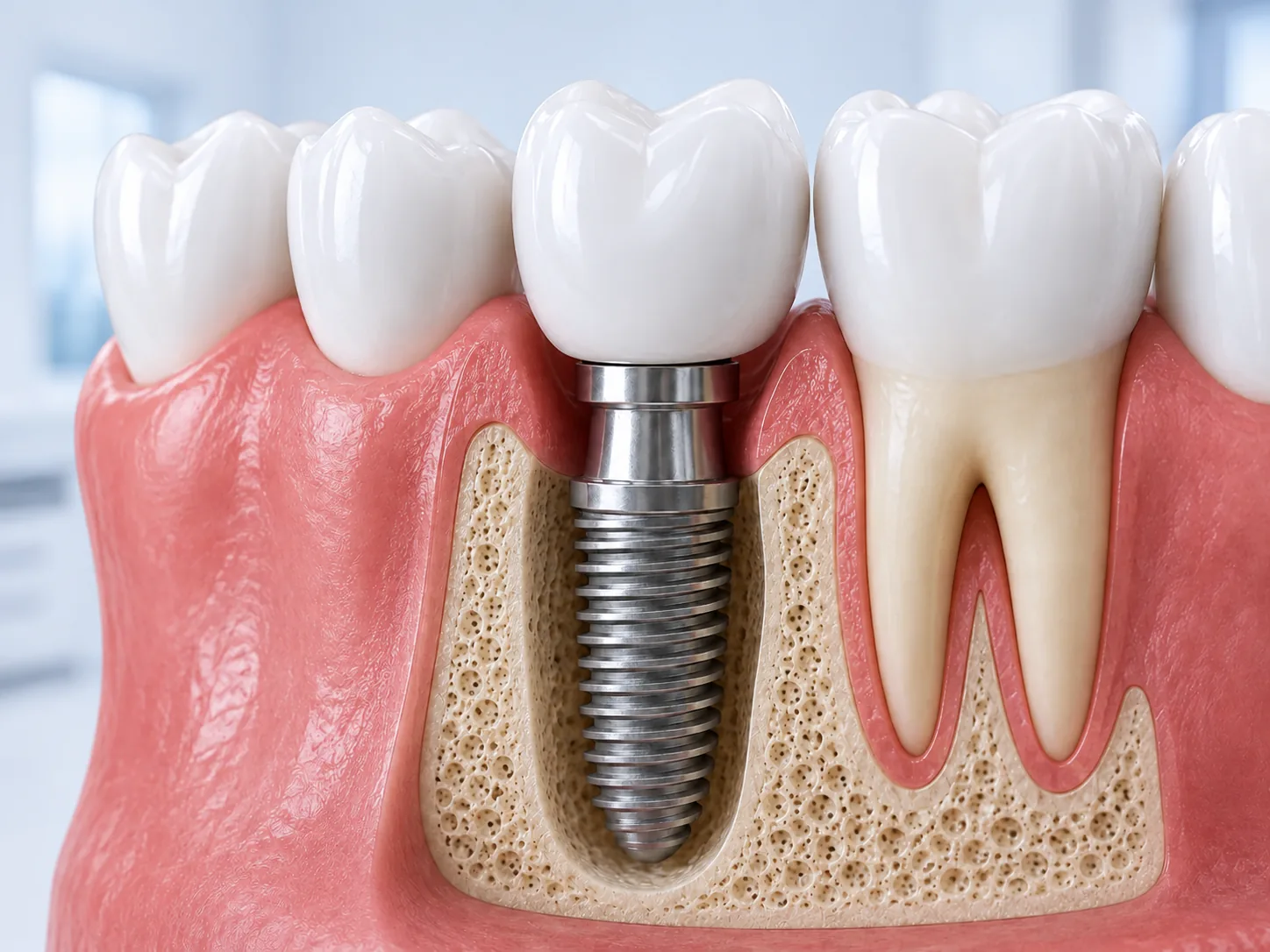
Implant surgery is straightforward. What determines whether the implant integrates properly with the bone is largely what happens in the two weeks afterwards — and that part is in your hands.
The first 24 hours
Bite gently on the gauze for the first hour to control bleeding. Some oozing is normal for the rest of the day. Apply a cold pack to the outside of the cheek in 15-minute intervals to limit swelling.
Do not rinse, spit forcefully or use a straw. All three disturb the clot forming at the surgical site. Do not smoke — nicotine constricts the blood vessels feeding the healing bone and is the single biggest predictor of early implant failure.
Days 2 to 7
Swelling peaks around day two or three and then subsides. Start gentle warm saline rinses from day two, letting the water fall out of your mouth rather than spitting.
Eat soft, cool foods: curd, khichdi, dal, mashed vegetables, eggs, smoothies eaten with a spoon. Chew on the opposite side. Avoid anything hard, crunchy, seedy or very hot.
Brush the rest of your mouth normally. Keep the brush away from the surgical site itself, but do not neglect the neighbouring teeth — plaque there increases the infection risk at the implant.
Days 7 to 14
Discomfort should be minimal by now. You can gradually return to a normal diet, still favouring the opposite side. Sutures, if non-resorbable, are usually removed around day seven to ten.
Resume light exercise after three or four days, but avoid heavy lifting and strenuous workouts for the first week — raised blood pressure can restart bleeding.
When to call us
The longer view
Bone fuses to the implant over three to six months. During that period the implant is healing silently and the main job is hygiene: brush twice daily, clean around the site as instructed, and attend every review. Implants do not decay, but the gum and bone around them can become inflamed exactly like natural teeth — and peri-implantitis is much harder to treat than gum disease.