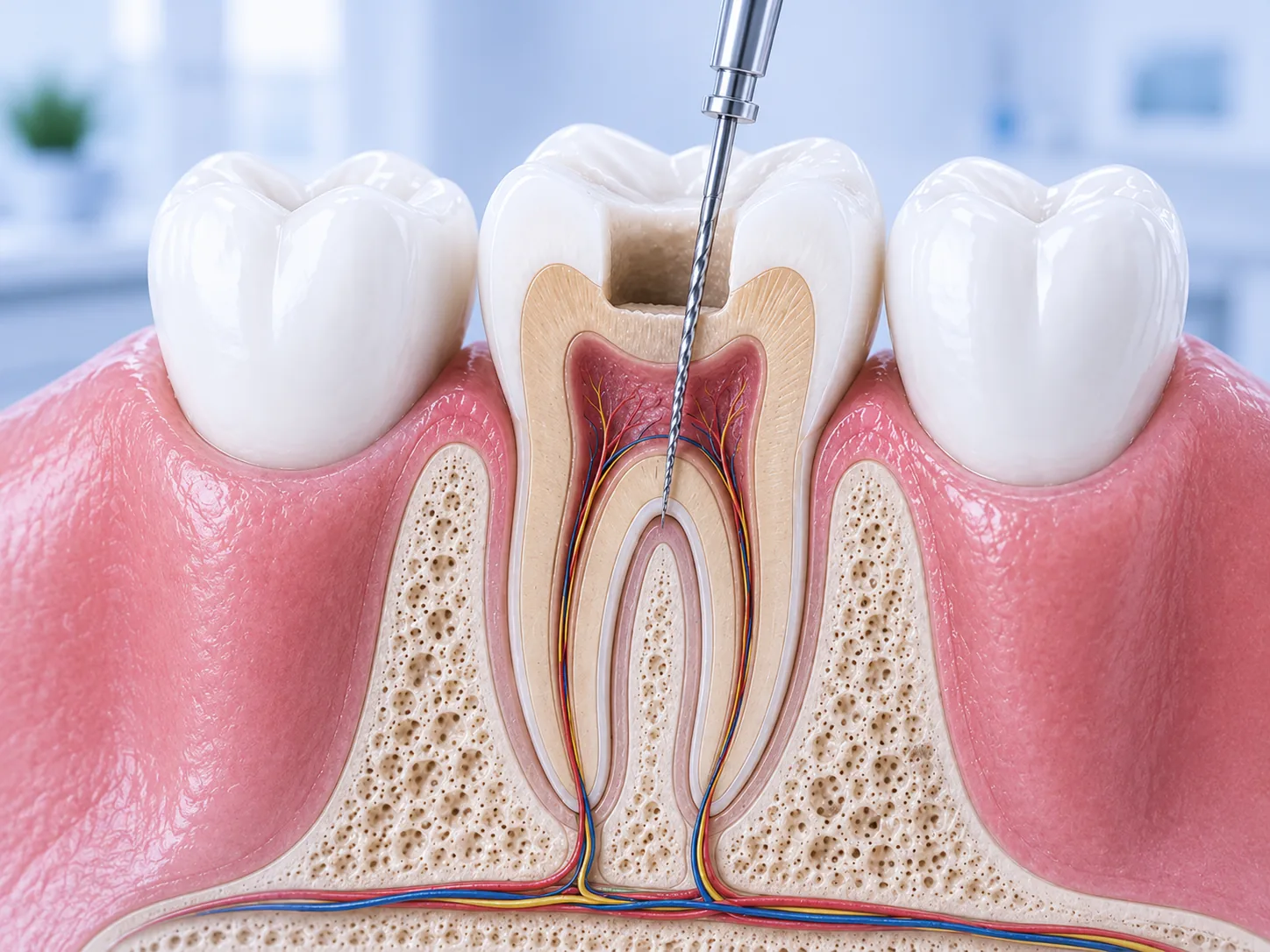
Root canal treatment has a worse reputation than it deserves. The procedure is not the painful part — the infection that makes it necessary is. The problem is that people wait, because the early signals are easy to explain away.
What a root canal actually does
Inside every tooth is a chamber of soft tissue containing the nerve and blood supply. When decay, a crack or repeated dental work lets bacteria reach that chamber, the tissue becomes inflamed and then dies. Root canal treatment removes the infected tissue, disinfects the canal and seals it, so the outer tooth can stay in place and keep functioning.
The alternative, in almost every case, is extraction — and replacing a tooth with an implant or bridge costs considerably more than saving the one you have.
Six signs worth acting on
Two signs that usually mean something else
Brief sensitivity to cold that disappears immediately is normally exposed dentine from gum recession or aggressive brushing, not nerve damage. A desensitising toothpaste and a softer brush fix most of these cases.
Generalised aching across several teeth on one side is more often clenching or grinding than infection. If you wake with a tight jaw and sore temples, ask about a night guard before you ask about a root canal.
Why waiting costs you
An infected nerve does not heal on its own. Painkillers mask the symptom while the infection spreads into the bone at the root tip. What could have been a single-visit root canal becomes a swollen face, a course of antibiotics, and sometimes a tooth that can no longer be saved.
If two or more of the six signs above sound familiar, get it looked at this week rather than next month.